Working Principle of Air Washer
As modern industrial and commercial spaces require a controlled environment that is cool, clean, and comfortable, the Air Washer Unit comes in as a smart and efficient solution. Designed to cool air using natural evaporative cooling, it sprays water into incoming hot air, reducing temperature while also removing dust and impurities.
Air washer units are widely used in industrial and commercial environments to provide clean, cool, and properly humidified air. They are an essential part of HVAC systems, especially in places where air quality and temperature control are critical. Understanding the working principle of an air washer helps in recognizing its importance in maintaining a comfortable and controlled indoor environment.
In this blog, we explain the working principle of an Air Washer Unit along with the key factors that influence its price, helping you make an informed decision for your industrial or commercial needs.
What is Air Washer
An air washer is an HVAC device designed to clean, cool, and humidify air using water as the primary medium. It works by passing air through a chamber where water is sprayed in the form of fine droplets. As the air comes in contact with these droplets, dust particles, pollutants, and impurities are captured, resulting in cleaner air.
The process of evaporation reduces the air temperature, providing a natural and energy-efficient cooling effect. This dual function of air cleaning and cooling makes air washers an effective solution for maintaining indoor air quality and comfort.
Air washers are commonly used in industrial and commercial environments such as textile units, pharmaceutical plants, food processing industries, and large workshops where maintaining proper air quality and humidity is essential.

Air Washer Unit Working
The working principle of air washer systems involves the integration of air purification and humidification. These systems use a combination of filters, such as HEPA filters, to capture airborne particles like dust and allergens. Simultaneously, water is circulated through the unit, and air passes over wet surfaces, promoting the evaporation of water vapor into the air. This dual functionality not only removes particulate matter but also adds moisture to the indoor environment. The evaporative process helps in maintaining optimal humidity levels, addressing issues related to dry air. Some advanced air washer systems may also incorporate additional technologies like UV light or ionization for disinfection and odor removal. Overall, the working principle of air washer units aims to create a cleaner and more comfortable indoor atmosphere by simultaneously purifying and humidifying the air. Regular maintenance, including cleaning and water treatment, is essential for efficient and sustained operation.
Air Washer Diagram
Air Washer is an equipment used in HVAC systems to clean, cool, and humidify the air. It works on the principle of washing the air with water to remove dust, dirt, and other impurities. A diagram of air washer generally includes components such as a fan, water spray system, eliminators, filters, and a casing.
In the Air washer diagram, air enters the unit through the inlet section and passes through water spray nozzles or wetted pads. The dust particles and pollutants in the air get trapped in the water droplets, ensuring only clean air moves forward. After this, the mist eliminators remove excess moisture from the air before it is supplied to the ducting system. The fan then circulates this cooled and cleaned air throughout the required space.
Air washers not only clean the air but also help in maintaining humidity levels, making them highly suitable for industries like textiles, pharmaceuticals, and commercial buildings.
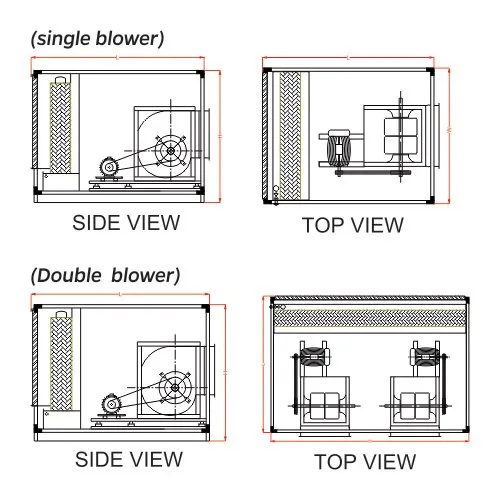
Air Washer Working Principle:
1. Evaporative Cooling Process
- The air washer works on the principle of adiabatic cooling, where hot air comes in direct contact with water sprays or wetted surfaces.
- As the water evaporates, it absorbs heat from the air, reducing the air temperature effectively without using refrigerants.
2. Air Filtration and Washing
- When air passes through water sprays, suspended dust, dirt, and other impurities get trapped in water droplets.
- This process makes the air cleaner, healthier, and free from many airborne contaminants.
3. Humidification of Air
- Apart from cooling, the air washer also adds necessary moisture to the dry incoming air.
- This helps maintain indoor air quality and prevents dryness in industrial environments, especially in textile and paper industries.
4. Continuous Water Circulation
- Water used in spraying is collected in a sump at the bottom of the unit.
- A circulation pump reuses this water after filtration, ensuring efficiency and less wastage.
5. Uniform Air Distribution
- With the help of high-capacity blowers/fans, the conditioned (cooled, humidified, and cleaned) air is distributed evenly into the workspace.
- This ensures proper ventilation and comfort in large areas.
6. Energy-Efficient Operation
- Unlike conventional air conditioning, air washers do not use compressors or refrigerants.
- They consume less power and provide natural cooling, making them cost-effective for large-scale applications.
7. Industrial Suitability
- Air washer units are widely used in textile mills, food processing plants, foundries, and other industries where fresh, cool, and humidified air is required for processes as well as worker comfort.
Air Washer Price in India
Air washers are industrial machines, there are a lot of manufacturers which build air washer units. All the manufacturers have their own price range. We Refcon engineering – Leading Air Washer Manufacturer, offer air washers at cost efficient pricing with assurity of quality, durability and reliability. The price of air washer units in India varies widely depending on factors such as capacity, design, material, and application type (industrial or commercial). Air washers are available in different configurations—from small portable units to large industrial systems—so their pricing range can differ significantly.
Average Price Range in India
Based on current market trends:
- Small / Portable Air Washers: ₹5,000 – ₹25,000
- Basic Industrial Air Washers: ₹20,000 – ₹50,000
- Medium Capacity Systems: ₹50,000 – ₹1,00,000
- Heavy-Duty Industrial Units: ₹1,00,000 – ₹2,50,000+
For example, some industrial units are available around ₹50,000, while advanced high-capacity systems can go beyond ₹2 lakh depending on specifications and automation level.