What is Air Washer?
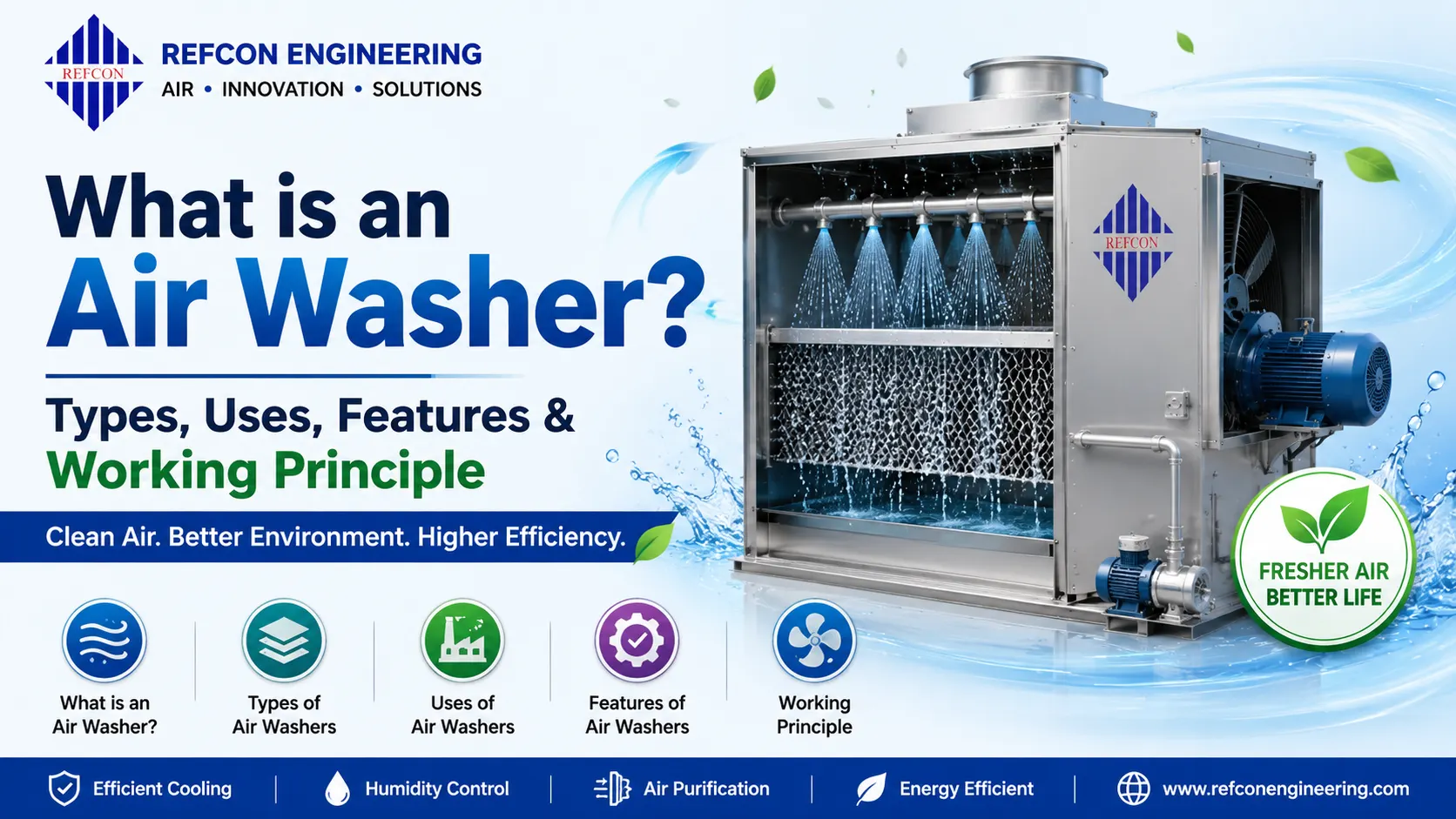
Air Washer is an air-conditioning and air-cleaning device that removes dust, airborne particles, and contaminants from the air while simultaneously controlling humidity levels. It works by passing air through a fine water spray, which captures impurities and cools the air before it is circulated into the desired space. Air washers are widely used in industrial facilities, commercial buildings, manufacturing units, textile plants, pharmaceutical industries, and HVAC systems where clean and conditioned air is essential.
What is an Air Washer Used for?
An Air Washer is used to clean, cool, and humidify air in industrial, commercial, and institutional environments. It removes dust, airborne particles, and other contaminants from the air while maintaining the desired humidity level. By improving indoor air quality and ventilation, air washers create a healthier and more comfortable environment for both workers and equipment.
Air washers are widely used in textile mills, pharmaceutical plants, food processing units, printing facilities, manufacturing industries, hospitals, shopping malls, and commercial buildings. They help control temperature, reduce airborne impurities, prevent static electricity, and maintain optimal humidity conditions required for various industrial processes.
Modern Air Washer systems provide efficient air filtration, cooling, and humidity control, making them an ideal solution for facilities that require clean and conditioned air for improved productivity and operational efficiency.
Types of Air Washer System
Air Washers are available in different configurations to meet the air conditioning, cooling, and humidity control requirements of various industries and commercial facilities. The selection of an air washer depends on factors such as airflow capacity, cooling needs, and environmental conditions.
1. Single-Stage Air Washer
A Single-Stage Air Washer uses one set of water spray nozzles to clean and condition the incoming air. As the air passes through the spray chamber, dust particles are removed and the air is cooled through evaporation. These air washers are suitable for applications requiring moderate cooling and humidity control.
Applications: Small manufacturing units, workshops, warehouses, and commercial buildings.
2. Double-Stage Air Washer
A Double-Stage Air Washer consists of two separate spray chambers or stages. The first stage removes dust and contaminants, while the second stage provides additional cooling and humidification. This design offers higher efficiency and better air treatment compared to single-stage systems.
Applications: Textile industries, pharmaceutical plants, printing units, and large industrial facilities.
3. Industrial Air Washer
Industrial Air Washers are heavy-duty systems designed to handle large volumes of air in manufacturing environments. They provide effective air cleaning, cooling, and humidity control to maintain optimal working conditions and protect sensitive production processes.
Applications: Textile mills, food processing plants, engineering industries, and manufacturing units.
4. HVAC Air Washer
HVAC Air Washers are integrated into Heating, Ventilation, and Air Conditioning (HVAC) systems to improve indoor air quality and maintain desired temperature and humidity levels. These units help create a comfortable and healthy indoor environment.
Applications: Shopping malls, hospitals, hotels, office buildings, and educational institutions.
5. Horizontal Air Washer
In a Horizontal Air Washer, airflow moves horizontally through the washing chamber. These systems are compact, easy to install, and commonly used where space is limited.
Applications: Commercial buildings and medium-sized industrial facilities.
6. Vertical Air Washer
Vertical Air Washers are designed with vertical airflow movement, making them suitable for installations where floor space is restricted. They provide efficient air cleaning and cooling while optimizing available space.
Applications: Multi-story buildings, industrial plants, and HVAC installations.
Features of Air Washer Unit
1. Water Tank
An Air Washer is equipped with a water tank that stores the water required for air washing and humidification. The tank capacity varies depending on the model and application. Larger water tanks allow longer operating hours with fewer refills, making them suitable for continuous industrial use.
2. Air Filter
Air Washers are fitted with high-quality air filters that capture dust, dirt, and larger airborne particles before the air passes through the water spray section. Typically, washable synthetic HDPE media filters with a filtering capacity of up to 10 microns are used, ensuring efficient air purification and extended filter life.
3. Humidification and Cooling
One of the key features of an Air Washer is its ability to cool and humidify air simultaneously. Through the process of evaporative cooling, water absorbs heat from the incoming air, reducing its temperature while increasing humidity levels for improved indoor comfort and process control.
4. Multiple Speed Settings
Many Air Washer systems come with adjustable fan speed controls that allow users to regulate airflow according to specific requirements. Multiple speed settings help optimize cooling performance and energy consumption.
5. Automatic Shut-Off System
Advanced Air Washers include an automatic shut-off feature that switches off the unit when the water level becomes too low or the tank is empty. This helps protect the equipment from damage and ensures safe operation.
6. Energy-Efficient Operation
Air Washers are designed to deliver effective cooling and air cleaning with low power consumption. Features such as energy-efficient motors, programmable controls, and optimized airflow design help reduce operating costs while maintaining high performance.
7. Effective Air Cleaning
By combining filtration and water washing technology, Air Washers efficiently remove dust, pollen, smoke particles, and other airborne contaminants, improving indoor air quality and creating a healthier environment.
8. Durable Construction
Industrial Air Washers are manufactured using corrosion-resistant materials and robust components to ensure long service life and reliable performance in demanding operating conditions.
How Air Washer Work? Working Principle
Air Washer works on the principle of air purification and evaporative cooling. It draws air into the unit and passes it through a chamber where water is sprayed through specially designed nozzles. As the air comes in contact with the water droplets, dust, dirt, and other airborne contaminants are removed.
During this process, water absorbs heat from the air, resulting in cooling and humidification. The cleaned and conditioned air then passes through moisture eliminators before being supplied to the desired area. This ensures a continuous flow of fresh, cool, and properly humidified air.
Benefits of Air Washer Unit
- Removes dust and airborne contaminants
- Provides cooling and humidification simultaneously
- Enhances employee comfort and productivity
- Improves product quality in manufacturing environments
- Reduces energy consumption compared to conventional cooling systems
- Creates a healthier indoor environment
Conclusion
Air Washers effectively maintain clean, cool, and properly humidified air in industrial and commercial environments. With their ability to remove airborne contaminants while providing effective cooling, they have become an essential component of modern HVAC systems. For reliable and high-performance Air Washer solutions, Refcon Engineering, Best Air Washer Manufacturers delivers innovative systems that meet the highest standards of quality and efficiency.